|
<< Blog; 28th Aug 2025
>> |
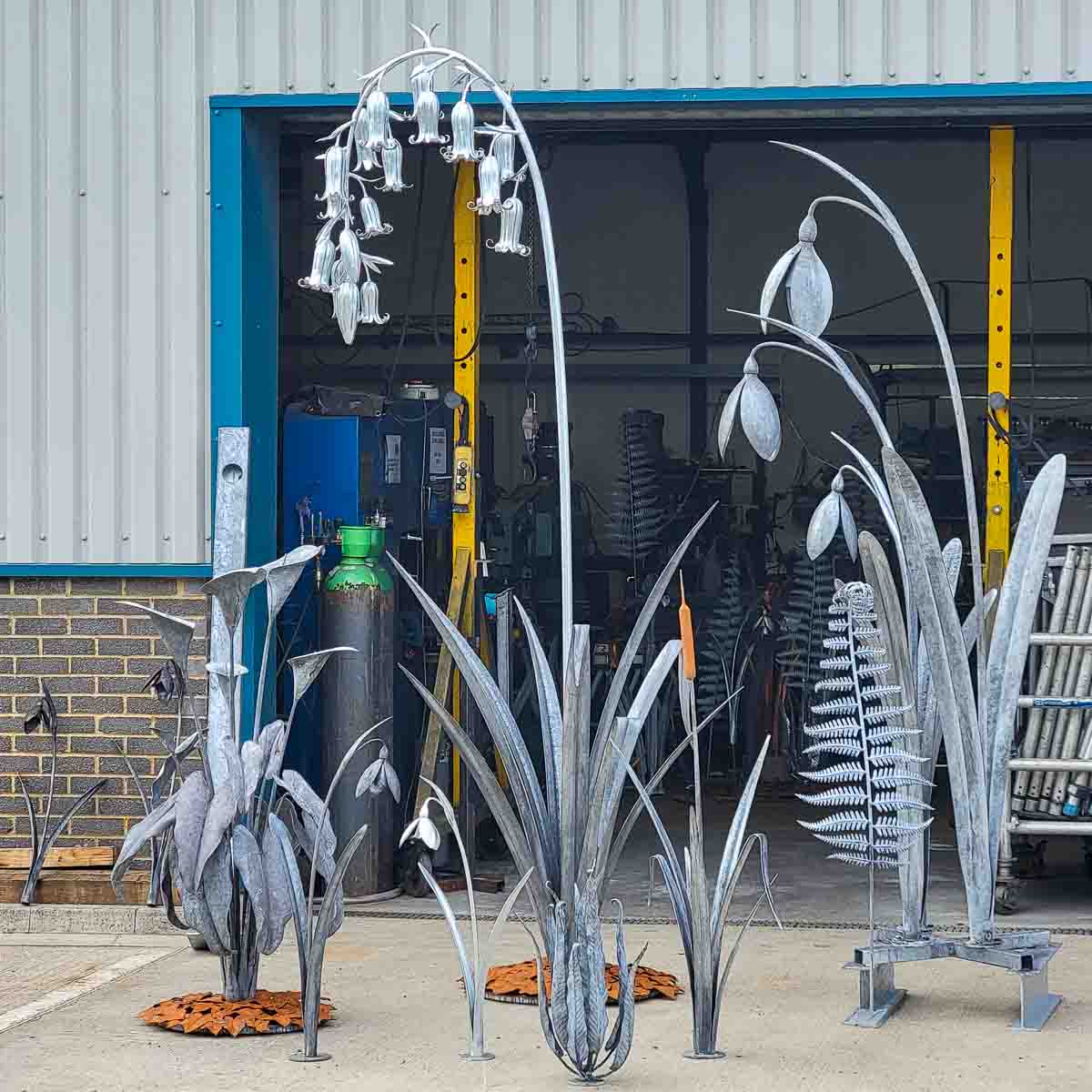
I recently took a selection of my
plant sculptures to exhibit at Leonardslee Gardens, so I thought I'd take this opportunity to discuss how my sculptural work can be installed.
I guess it is a bit of a "nuts-and-boltsie" subject ... but I do get asked about it quite regularly ... so here goes!
Smaller pieces such as my
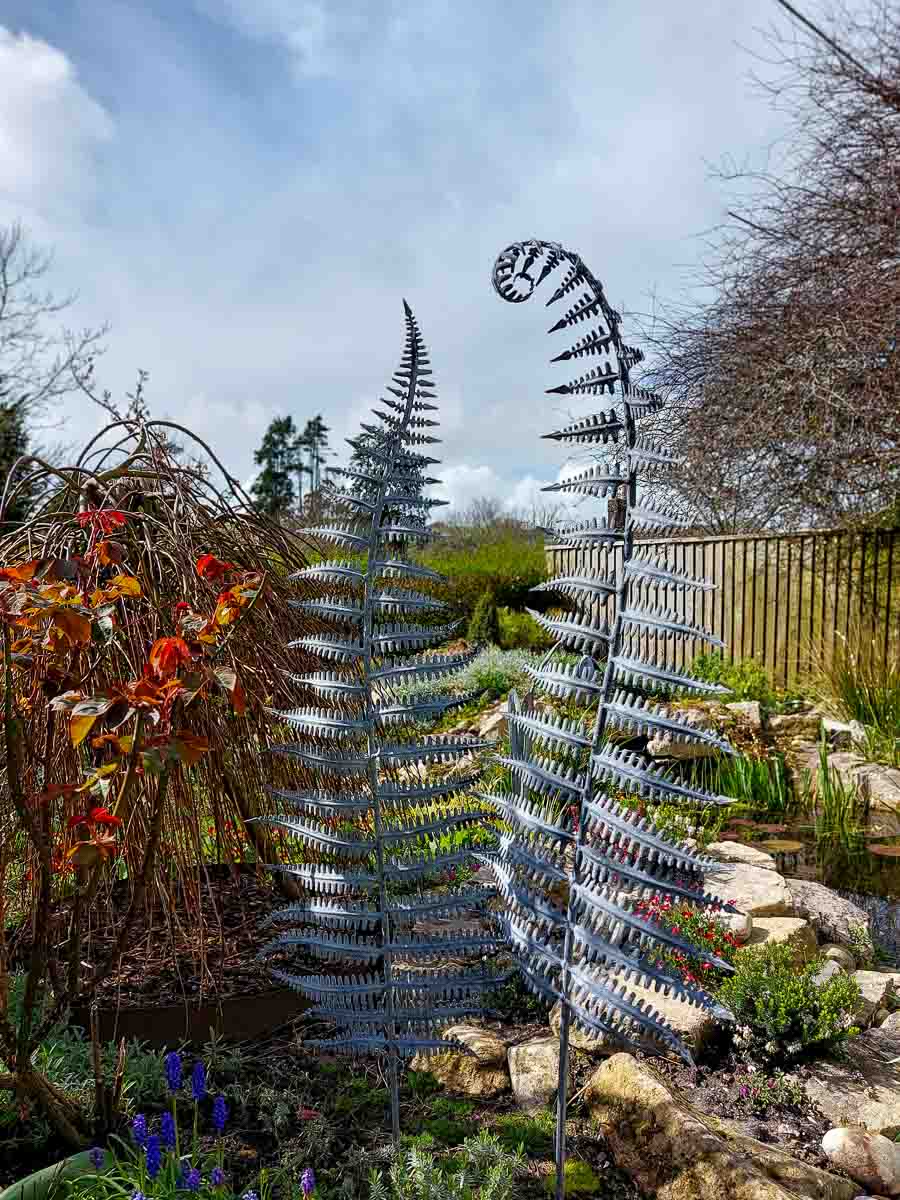
fern leaves can simply be pushed into the ground (and make
good trellises 🙂). However, picture 4 shows a more versatile option I can offer instead.
I make medium sized sculptures such as my
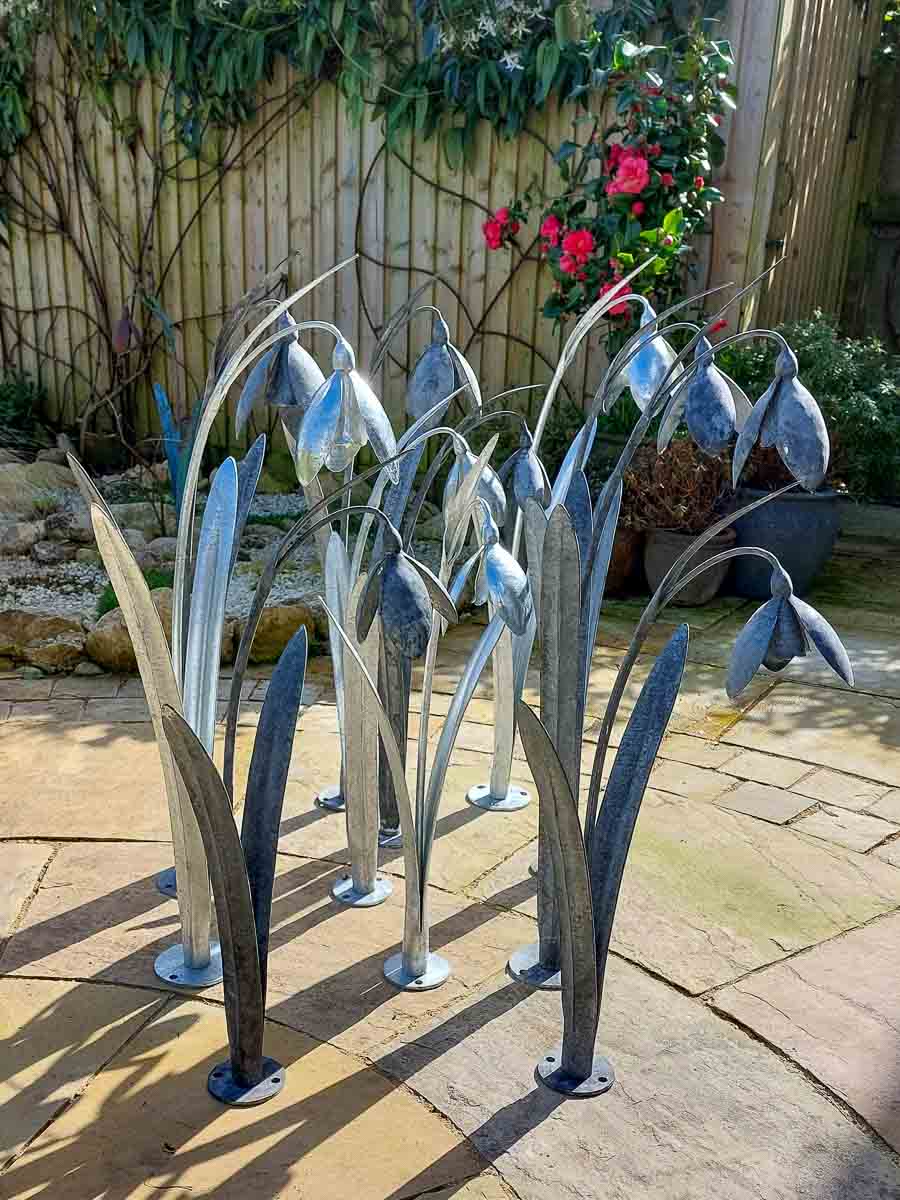
smaller snowdrops or
bulrushes
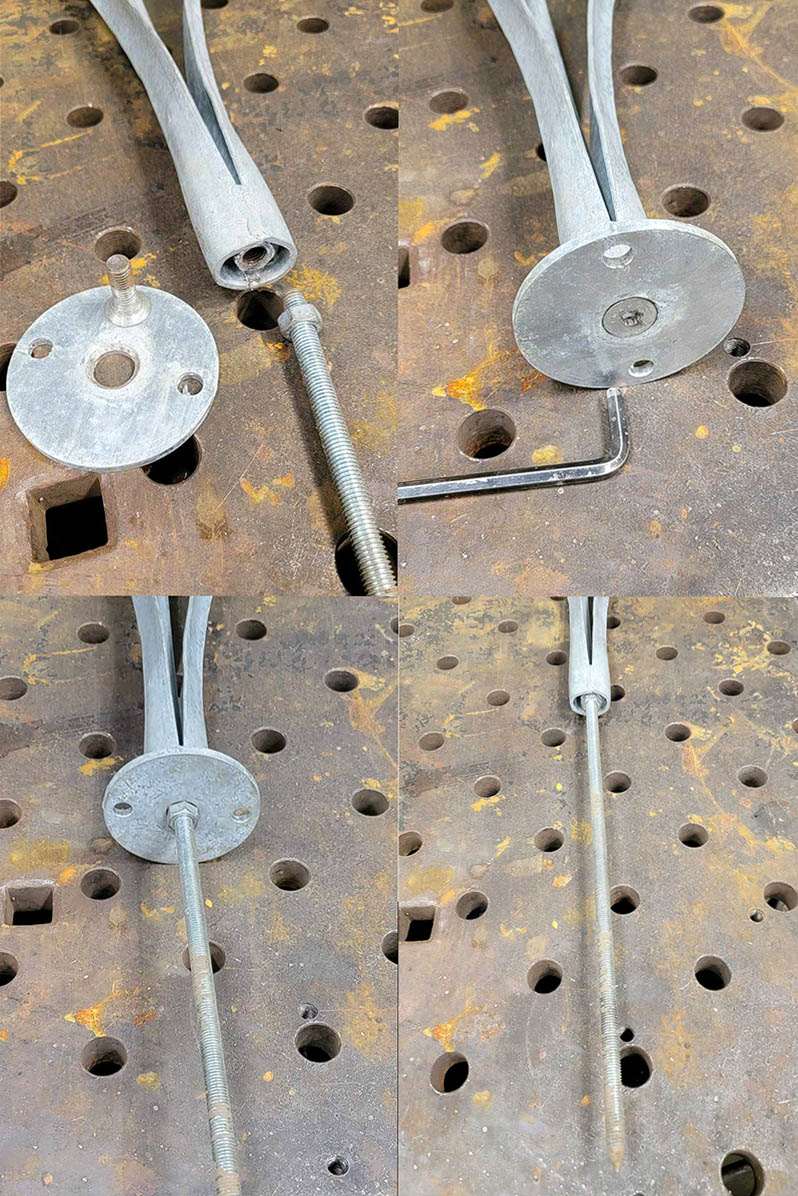
with a thread in the base. This allows either a spike, or different sized round bases, to be screwed on.
Some customers like to use both since the small base allows the spike to be pushed into hard ground with a little help from a foot.
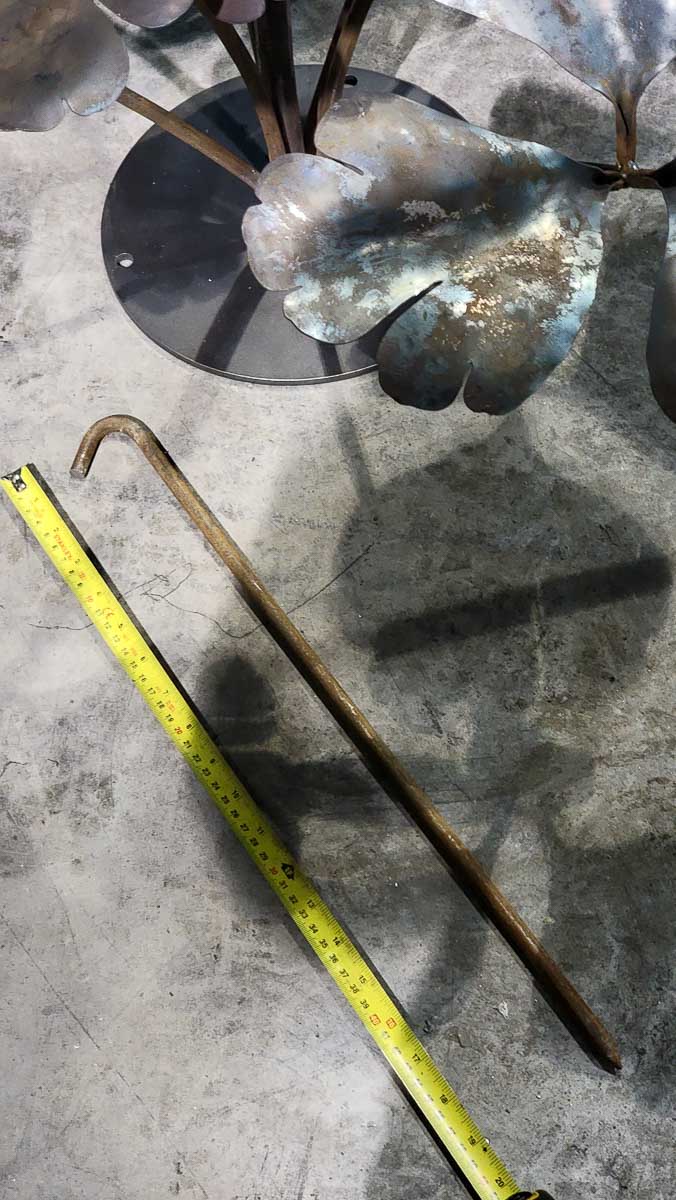
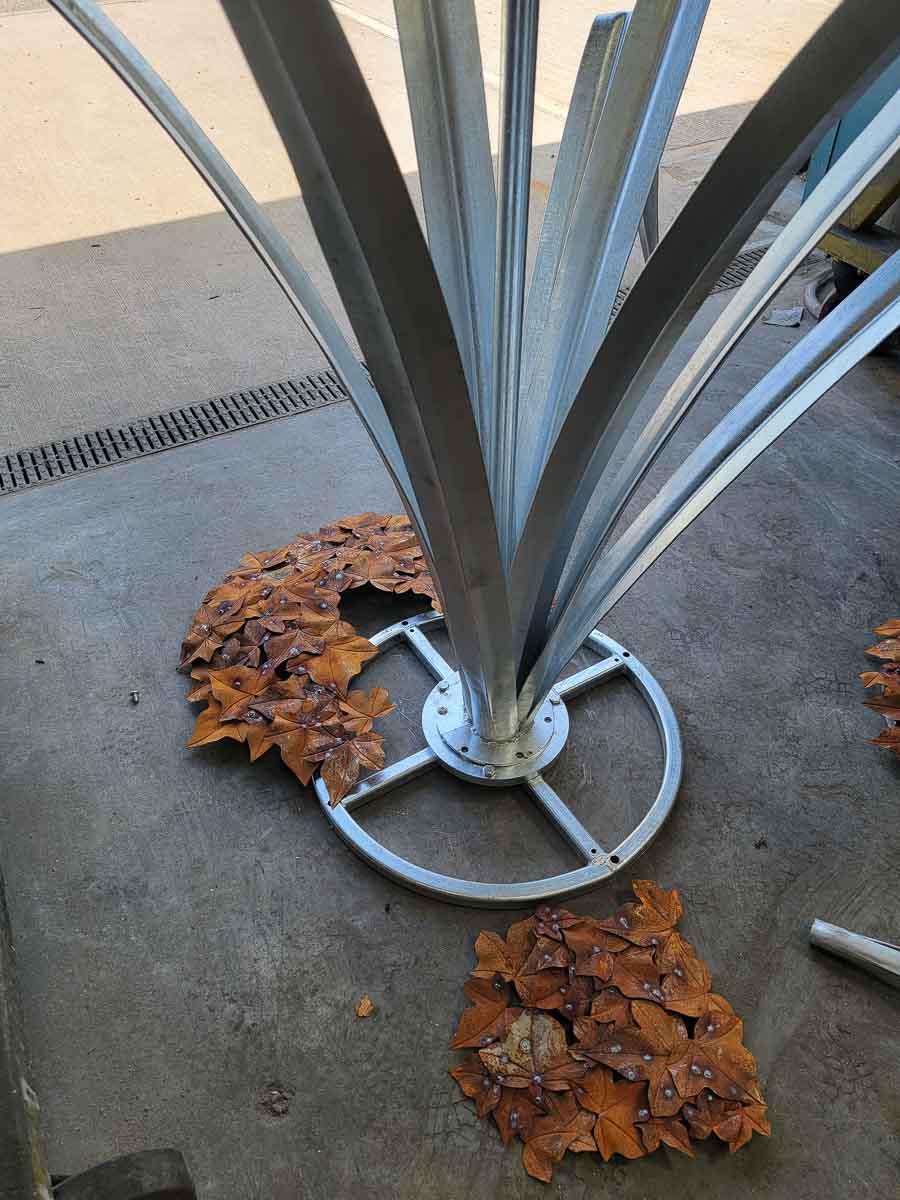
Picture 5 shows a medium sized base that is fixed with oversize tent pegs I can supply. However, larger or top heavy sculpture requires a more substantial base.
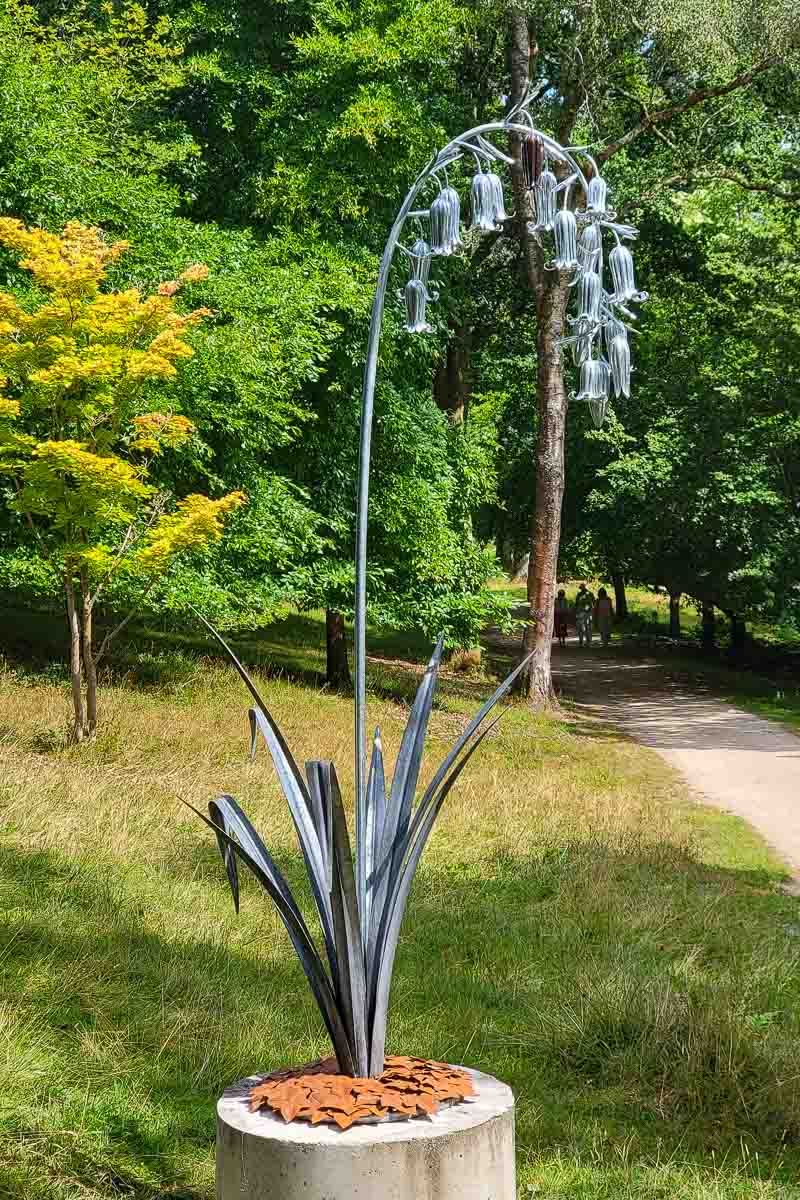
Pictures 6 and 7 show an example of an
11ft bluebell with such a base, and how it can be disguised with a scattering of rusty leaves.
This style of base can be bolted down to a concrete pad or plinth if needed, or
hidden with gravel or soil.
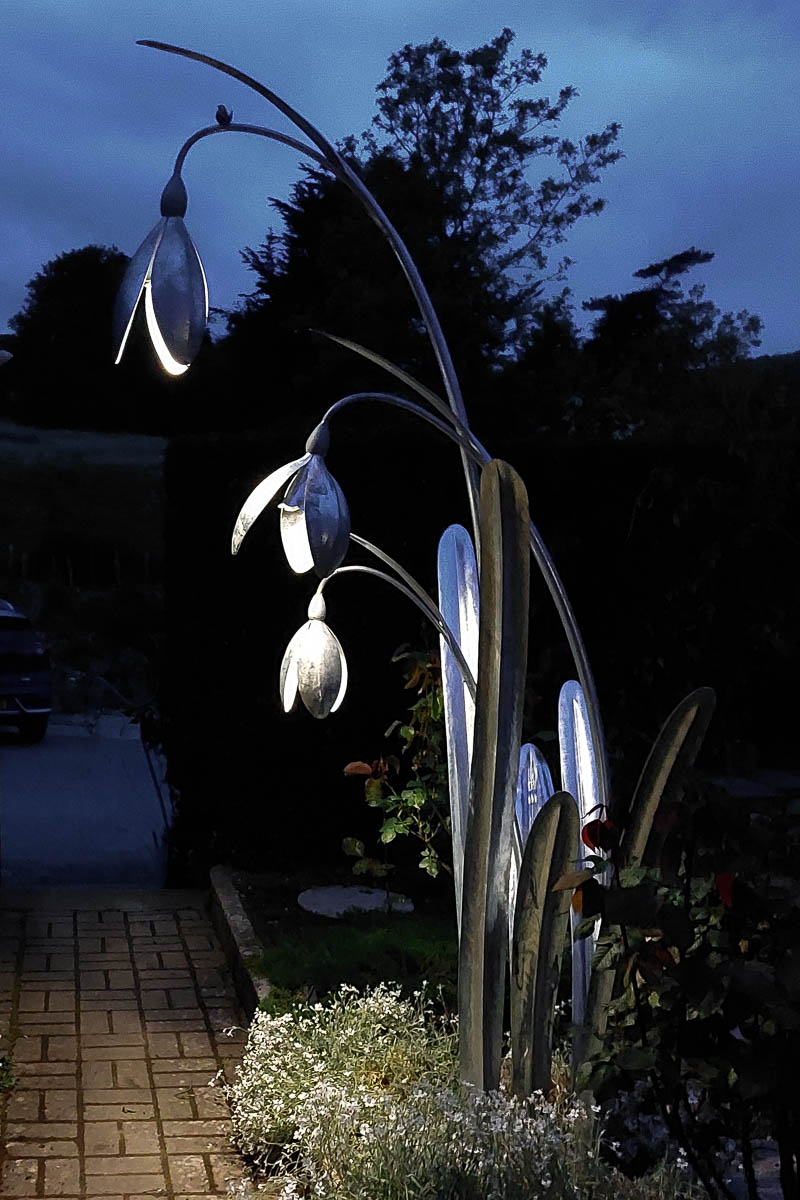
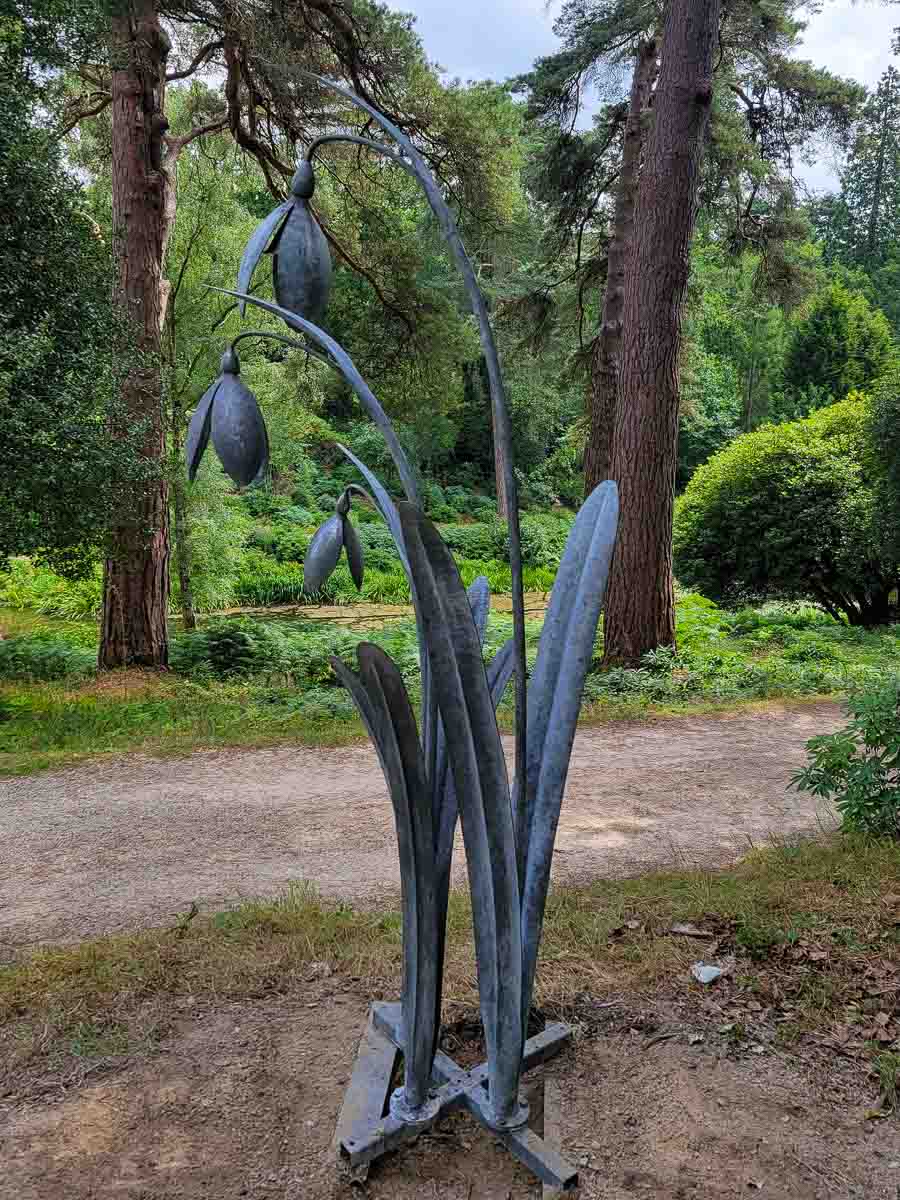
Pictures 8 and 9 show my
larger snowdrops with an alternative base that can be buried in soil.
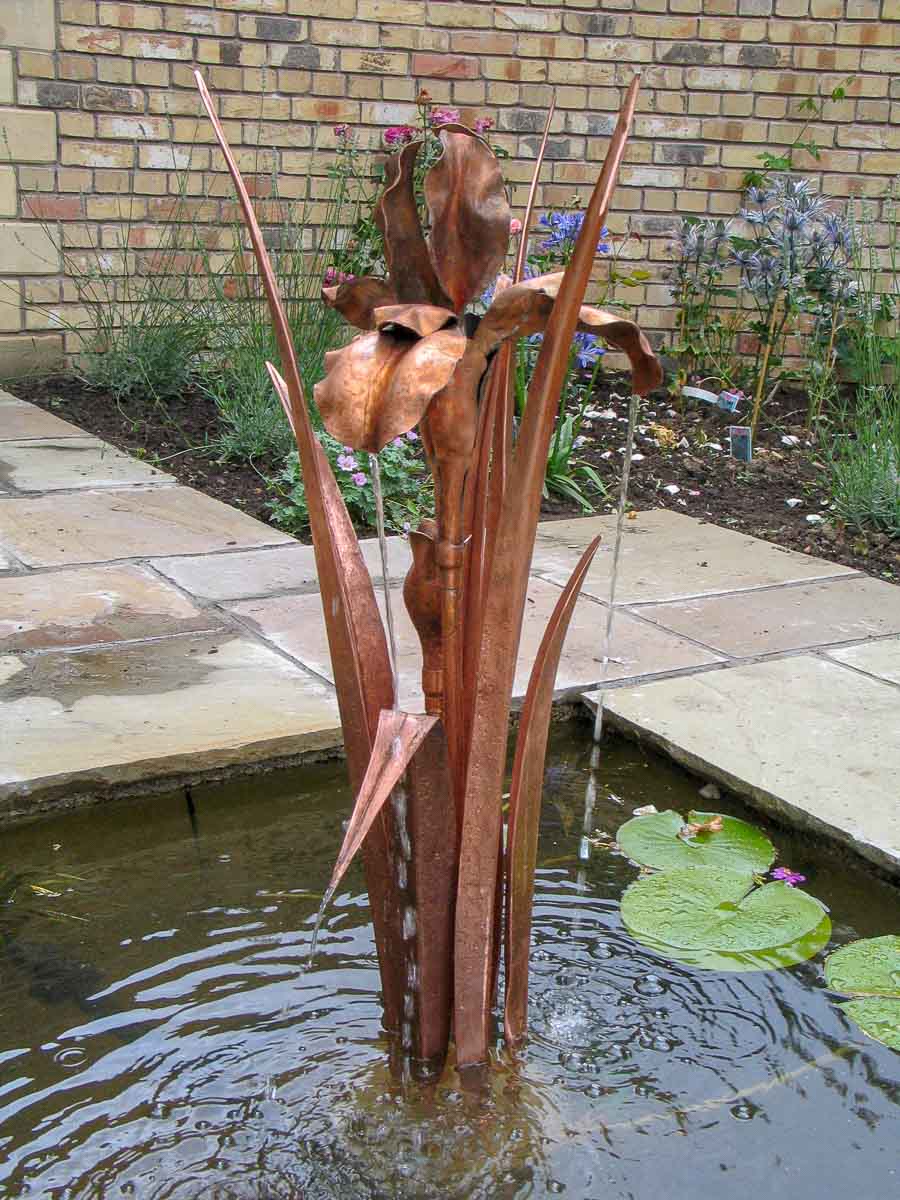
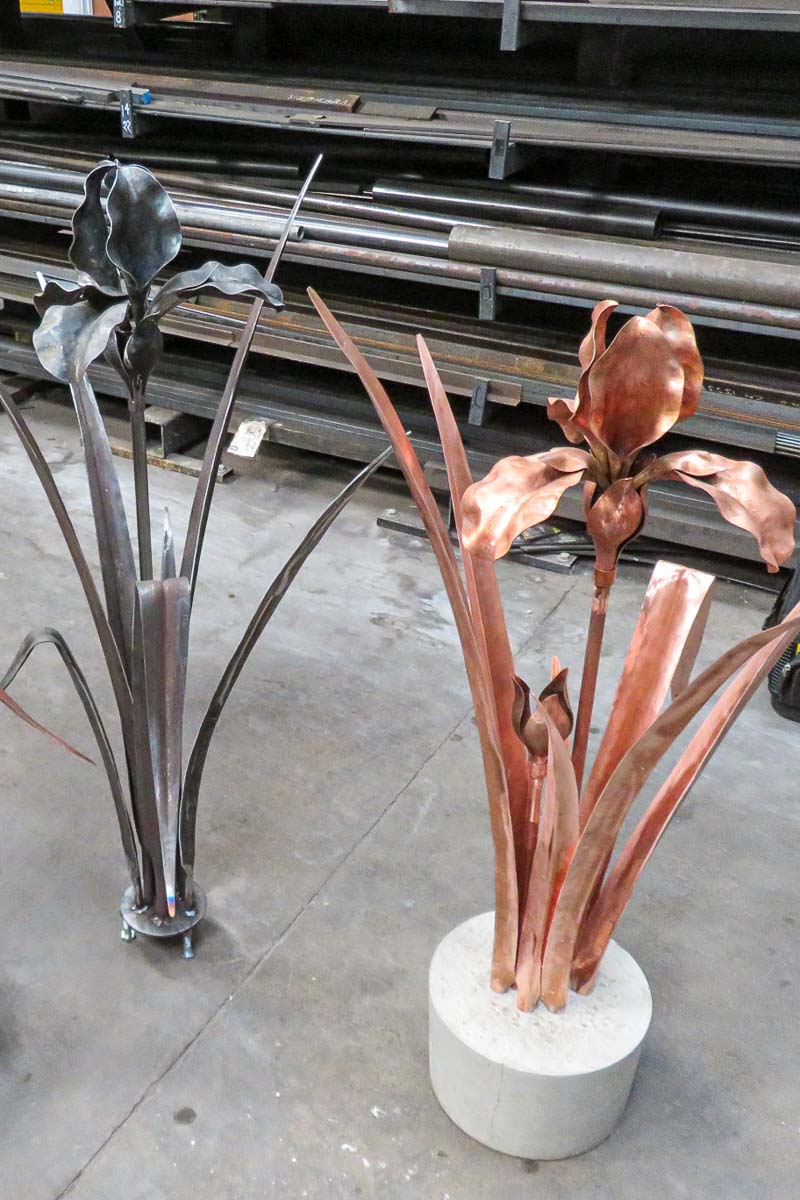
Water features needs a different approach depending on the depth of water. The last picture
shows a concrete base on a
copper iris.
This is a very effective solution for shallow water since the sculpture can simply be placed in the water and the mass of concrete prevents it from being easily
toppled by the wind. If the sculpture sits on a
plinth in deep water I can supply it with a round base to be bolted down.
This is just a selection of approaches I take, but I'm more than happy to discus and
investigate other options that may be more suitable for you.
|
|
|